Stray/Feral Cats
The City of Chico only accepts sick or injured cats and orphaned kittens. This page contains information about healthy stray and feral cats.
For information on what to do if you see kittens outside, scroll down to the bottom. Click on the file below for a flowchart showing what to do with cats under our policies.

| Cat Flowchart.pdf |
What You Should Know
Feral cats should not be relocated outside their natural range (200 feet or 2/3rds of a city block) and trapping and relocating a cat is considered abandonment. Please keep in mind that a cat that seems feral might still be someone's pet, and as such is their personal property. There are no leash laws for cats, and cats are permitted to roam freely.
California Laws
Willful abandonment of an animal is prohibited. (Penal Code section 597s)
It is illegal to intentionally kill an animal. (Penal Code section 597)
Poisoning of animals is specifically prohibited. (Penal Code section 596)
Cats in Your Neighborhood
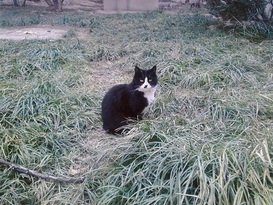
Feral cats are cats that are unsocialized and avoid human contact because they have never had human contact, or over time have lost contact with people. These cats may have been former house cats (pets) or may have been born to former house cats or other feral cats. Feral cats can still have a caregiver, someone who is providing food and shelter, or they may seek food and shelter on their own, and consider the neighborhood to be "home". Whatever their origin, most survive where there is food and shelter and do well in a variety of settings, from urban to rural.
Cats living in the neighborhood, whether friendly or feral, owned or not, are referred to as "neighborhood" or "community" cats. Because feral cats are unsocialized and therefore not adoptable, bringing feral cats to the shelter is not the best option as they will most likely be euthanized. Removing cats from an area is not a good long-term solution as the void left by the cats removed will soon be filled by more cats - or other species such as raccoons, opossums or skunks (the "vacuum effect"). It is an ineffective use of taxpayer dollars to trap, hold and then euthanize feral cats. The most effective and humane way of dealing with neighborhood cats is leaving the cats where they are and having them spayed or neutered. It prevents unwanted kittens, therefore breaking the breeding cycle, allows the cats to live out their lives in their own territory, and over time actually results in a reduction of the cat population. And left in their natural habitat, cats are beneficial by providing natural rodent control.
Click on the links below to learn more:
Cats living in the neighborhood, whether friendly or feral, owned or not, are referred to as "neighborhood" or "community" cats. Because feral cats are unsocialized and therefore not adoptable, bringing feral cats to the shelter is not the best option as they will most likely be euthanized. Removing cats from an area is not a good long-term solution as the void left by the cats removed will soon be filled by more cats - or other species such as raccoons, opossums or skunks (the "vacuum effect"). It is an ineffective use of taxpayer dollars to trap, hold and then euthanize feral cats. The most effective and humane way of dealing with neighborhood cats is leaving the cats where they are and having them spayed or neutered. It prevents unwanted kittens, therefore breaking the breeding cycle, allows the cats to live out their lives in their own territory, and over time actually results in a reduction of the cat population. And left in their natural habitat, cats are beneficial by providing natural rodent control.
Click on the links below to learn more:
| The Vacuum Effect - Why Catch and Kill Doesn't Work.pdf |
| Why Trap-Neuter-Release Feral Cats.pdf |
If you are feeding any cats in your neighborhood, please be responsible and have them spayed or neutered. You might be able to work together with other people in your neighborhood to get this done.
The following organizations can help with traps and the cost of surgery:
Neighborhood Cat Advocates: (free spay/neuter of feral cats in Chico area) 530-324-2292
Paws of Chico: (spay/neuter vouchers) 530-895-2109
PawPrints Thrift Store: (spay/neuter vouchers) 530-895-1791
Butte Humane Society: (low cost spay/neuter clinic) 530-343-7917
PAWS of Oroville: (low cost spay/neuter clinic) 530-534-0900
The following organizations can help with traps and the cost of surgery:
Neighborhood Cat Advocates: (free spay/neuter of feral cats in Chico area) 530-324-2292
Paws of Chico: (spay/neuter vouchers) 530-895-2109
PawPrints Thrift Store: (spay/neuter vouchers) 530-895-1791
Butte Humane Society: (low cost spay/neuter clinic) 530-343-7917
PAWS of Oroville: (low cost spay/neuter clinic) 530-534-0900
What About Stray Cats?
Stray cats are friendly cats that may appear to be unowned or abandoned, when in fact they could be owned cats out roaming the neighborhood. A study of 42 cats by University of Illinois over two years showed a mean home range for pet cats just under 4.9 acres. That's several City blocks! The BBC and the Royal Veterinary College fitted cats with trackers to see exactly how far cats actually roamed in a 24 hour period: click here to see some maps of how that looks. Many people assume that a stray is lost or abandoned, when in fact the cat knows exactly where it is!
A study by the Journal of American Veterinary Medical Association shows that cats reported to be lost by their owners were at least 13 times more likely to return home by non-shelter means (return on their own, found by the owner or a neighbor) than if the cats were brought to the shelter. The time elapsed before an owner contacts the shelter usually exceeds the stray holding period (4 days, not counting the day they came in or holidays), meaning the cat may be transferred, adopted or euthanized before the owner ever visits the shelter.
If you see friendly cats in your yard, it's best to leave them alone as they may actually belong to someone in the neighborhood. Do not feed them or else they will not go home. Remember, a cat's owner is more likely to find their cat if the cat is not brought to the shelter, but there are ways to help reunite lost cats with their owners:
If you are a property owner or manager and a cat has been abandoned by their owner (cat is left in an apartment by a tenant, they moved out and left the cat outside) please contact the shelter immediately for the proper procedure to handle this situation, before bringing the cat to the shelter.
A study by the Journal of American Veterinary Medical Association shows that cats reported to be lost by their owners were at least 13 times more likely to return home by non-shelter means (return on their own, found by the owner or a neighbor) than if the cats were brought to the shelter. The time elapsed before an owner contacts the shelter usually exceeds the stray holding period (4 days, not counting the day they came in or holidays), meaning the cat may be transferred, adopted or euthanized before the owner ever visits the shelter.
If you see friendly cats in your yard, it's best to leave them alone as they may actually belong to someone in the neighborhood. Do not feed them or else they will not go home. Remember, a cat's owner is more likely to find their cat if the cat is not brought to the shelter, but there are ways to help reunite lost cats with their owners:
- Post flyers around the neighborhood. Click on this link to a site where you can create and print a flyer: Pet Flyer Make sure to share the flyer with local veterinarians.
- Bring the cat to a veterinarian or to the shelter to be scanned for a microchip. Quite often when we scan a cat for a chip we discover the cat is only a few houses away from home.
- Post a Found report and check the Lost logs HERE.
- Attach a paper collar to the cat with your phone number asking the owner to contact you.
- Create an ad and search posts on Craigslist (Community>"Pets" and "Lost and Found")
- Post pictures and search posts on Facebook Groups such as "Cody Alert", "Lost & Found Pets . . . Northern California!", "Chico Missing Pets: Cody Alert Auxiliary Page", "Butte County Lost Pets", "530 Cody Alert", "530 Lost & Found Pets", and "530 Pets" (there are new ones forming all the time).
- Post an ad in local newspapers.
If you are a property owner or manager and a cat has been abandoned by their owner (cat is left in an apartment by a tenant, they moved out and left the cat outside) please contact the shelter immediately for the proper procedure to handle this situation, before bringing the cat to the shelter.
| National Animal Care & Control Association: Animal Control Intake of Free Roaming Cats.pdf |
Cats in Your Yard
Cats are highly adaptable and have coexisted with humans for thousands of years, avoiding people but living in close proximity to them. And while you might not mind the cats roaming the neighborhood, you might not like some of the things they do in your yard. Like any wild animal, most stray and feral cats live where they find food and shelter. And just like dealing with wildlife, controlling food sources and shelter and using humane deterrents is effective in keeping stray or feral cats from being a nuisance. Something as simple as not feeding your pets outdoors may work, but you may have to experiment with a variety of solutions to find the combination that works best for your situation.
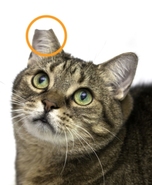
Start out by talking to your neighbors to determine whether the cats you are seeing are owned, stray or feral, if they are spayed or neutered, and if there are people in the neighborhood feeding them. Cats that are ear tipped (missing the very tip of one ear) have been spayed or neutered. Often working with your neighbors can be more effective than trying to find solutions on your own. (See above for free and low cost spay/neuter options.)
Click on the link below to learn more about deterring cats in your yard.
Cats are highly adaptable and have coexisted with humans for thousands of years, avoiding people but living in close proximity to them. And while you might not mind the cats roaming the neighborhood, you might not like some of the things they do in your yard. Like any wild animal, most stray and feral cats live where they find food and shelter. And just like dealing with wildlife, controlling food sources and shelter and using humane deterrents is effective in keeping stray or feral cats from being a nuisance. Something as simple as not feeding your pets outdoors may work, but you may have to experiment with a variety of solutions to find the combination that works best for your situation.
Start out by talking to your neighbors to determine whether the cats you are seeing are owned, stray or feral, if they are spayed or neutered, and if there are people in the neighborhood feeding them. Cats that are ear tipped (missing the very tip of one ear) have been spayed or neutered. Often working with your neighbors can be more effective than trying to find solutions on your own. (See above for free and low cost spay/neuter options.)
Click on the link below to learn more about deterring cats in your yard.
| How to Live With Cats Brochure-rev3.pdf |
If you see kittens outdoors:
If you find kittens who are alone, determine if the mother has actually abandoned them. She could be looking for food or just hiding nearby. The only way to determine this is to wait. Leave the kittens alone and observe from a distance or a hidden spot. Often she will return within a few hours. Be patient. Kittens that are being cared for will seem healthy and content. Removing kittens when there is a mother to care for them may actually decrease their chances of survival. Kittens that have to be bottle fed are at a much higher risk of not surviving.
As the kittens get older, the mother will spend less time with them. Click here to download a handout to determine the age of a kitten, or visit Alley Cats Allies kitten progression page. If it appears the mother has truly abandoned them or something has happened to her, the kittens are in danger, or they seem to be in distress, then they need intervention. Depending on their age, you may decided to provide care for them until they are old enough to be adopted, or they may be old enough to find them homes. If they are older than 4 months, they are good candidates for Trap-Neuter-Return.
For more information about caring and finding homes for kittens, see alleycat.org/kittens
As the kittens get older, the mother will spend less time with them. Click here to download a handout to determine the age of a kitten, or visit Alley Cats Allies kitten progression page. If it appears the mother has truly abandoned them or something has happened to her, the kittens are in danger, or they seem to be in distress, then they need intervention. Depending on their age, you may decided to provide care for them until they are old enough to be adopted, or they may be old enough to find them homes. If they are older than 4 months, they are good candidates for Trap-Neuter-Return.
For more information about caring and finding homes for kittens, see alleycat.org/kittens
| Policy changes for the City of Chico Animal Services.pdf |
